1. Market Outlook: Booming U.S. Market
The United States is the world’s largest aesthetic‑medicine consumption market. As a star category of at‑home beauty devices, laser hair‑removal devices maintain robust market growth. According to industry research data, the global semiconductor laser hair‑removal device market is projected to reach approximately USD 1.523 billion by 2031, with a compound annual growth rate of around 6.5%. The broader optical hair‑removal device market, covering both laser and intense pulsed‑light (IPL) technologies, is expected to hit USD 2.542 billion over the same period.
Driven by the sustained stay‑at‑home economy and rising consumer demand for personal care, demand for at‑home laser hair‑removal devices remains particularly strong across North America. International brands including Candela, Cynosure and Lumenis have long established their presence in this segment. Chinese manufacturers such as Pulse Medical, Shanghai Rundu Optoelectronics and Guangzhou Linome are also actively expanding into overseas markets. In 2025, Pulse Medical obtained FDA 510(k) clearance for its semiconductor laser hair‑removal device, marking a landmark case for Chinese enterprises entering the U.S. market.
Nevertheless, opportunities come with challenges. The U.S. market imposes high entry barriers, and strict FDA oversight constitutes the primary compliance hurdle for all exporting manufacturers.
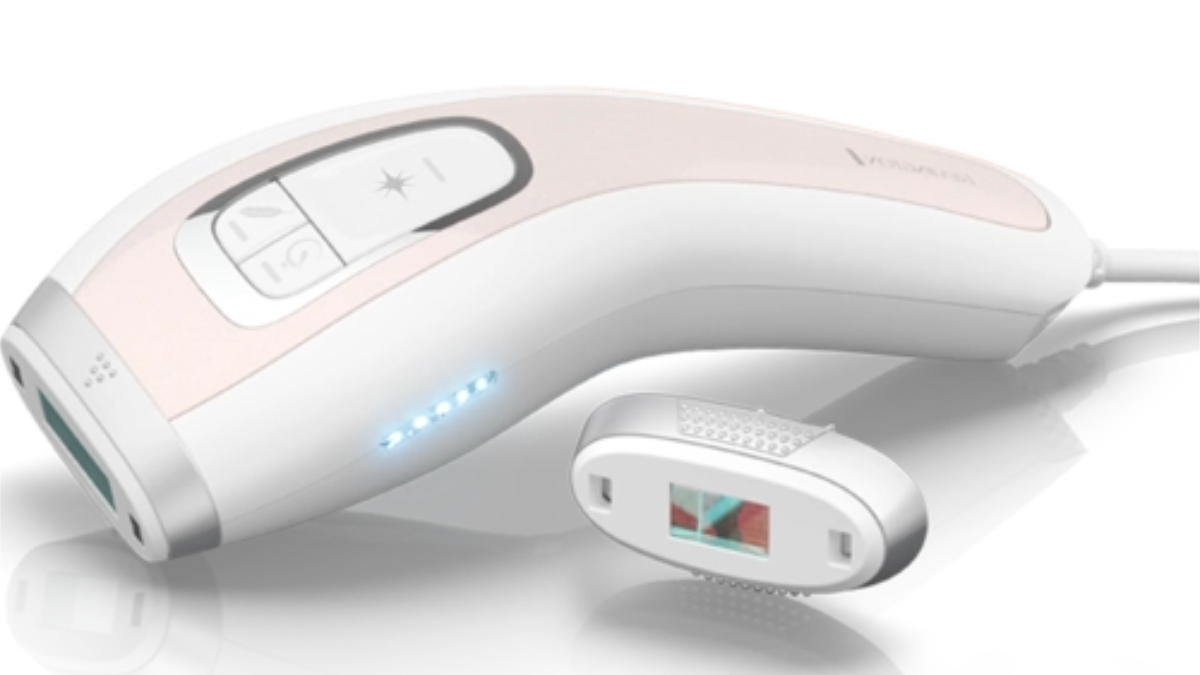
2. FDA Registration: Mandatory Market‑Access Requirement for U.S.‑Bound Laser Hair‑Removal Devices
FDA registration is not a certificate issued by the FDA. It refers to the compliance process whereby products meet relevant U.S. federal regulatory requirements, together with establishment registration and product listing. Under the U.S. Federal Food, Drug, and Cosmetic Act, laser products are subject to mandatory regulation by the FDA’s Center for Devices and Radiological Health (CDRH) due to their radiating characteristics.
In the United States, laser hair‑removal devices are generally classified as Class II medical devices, with product codes commonly GEX (laser surgical instruments) or OHT (intense pulsed‑light devices). The exact regulatory classification depends on the technical approach. Semiconductor laser hair‑removal devices are strictly defined as laser products and require compliance assessment under 21 CFR 1040.10 and 21 CFR 1040.11. Some intense pulsed‑light (IPL) units may be regulated as light‑based devices.
For certain products, manufacturers must submit a Premarket Notification, known as 510(k), to demonstrate substantial equivalence in safety and effectiveness to legally marketed predicate devices. The clearance obtained by Pulse Medical is a 510(k) authorization under the explicit Class II device classification.
3. Core FDA Compliance Requirements for Laser Hair‑Removal Devices
3.1 Laser Classification and Safety Testing
The FDA categorises laser products into four hazard‑based classes: Class I through Class IV. The vast majority of consumer‑grade at‑home laser hair‑removal devices must satisfy Class I or Class 1C criteria, ensuring no harm to the human body, especially the retina, under normal operation or single‑fault conditions. Manufacturers shall perform testing per IEC 60825‑1 and provide test reports covering key parameters such as wavelength, pulse energy and power density. Following the issuance of Laser Notice No. 56 in 2019, manufacturers may use the IEC 60825‑1 classification system to demonstrate compliance.
3.2 Establishment Registration and Product Listing
Manufacturers must complete Establishment Registration and Product Listing on the FDA official portal. Non‑U.S. entities are required to appoint a U.S. Agent to serve as the official point‑of‑contact for the FDA.
3.3 Labelling and Instruction Manual Requirements
The FDA enforces strict labelling rules. Permanent, non‑removable product markings shall display the laser class identifier and hazard warnings such as “Do not stare into the beam”. English‑language instructions shall clearly list contraindications, potential adverse effects and full operating procedures.
3.4 Import Declaration and Annual Reports
An FDA Form 2877 import declaration must be filed for each import shipment. Manufacturers are also obligated to submit annual reports to the FDA to update production information and complaint records.
4. Workflow and Timelines for FDA Registration of Laser Hair‑Removal Devices
Standard workflow: Confirm laser classification → Submit samples for safety testing → Compile technical documentation → File FDA registration application → Obtain FDA assignment numbers upon review approval → Apply compliant labelling.
Timelines:
Required documentation includes: product name and model, manufacturer details, laser classification and output specifications, user manual, safety‑control descriptions and laboratory test reports.