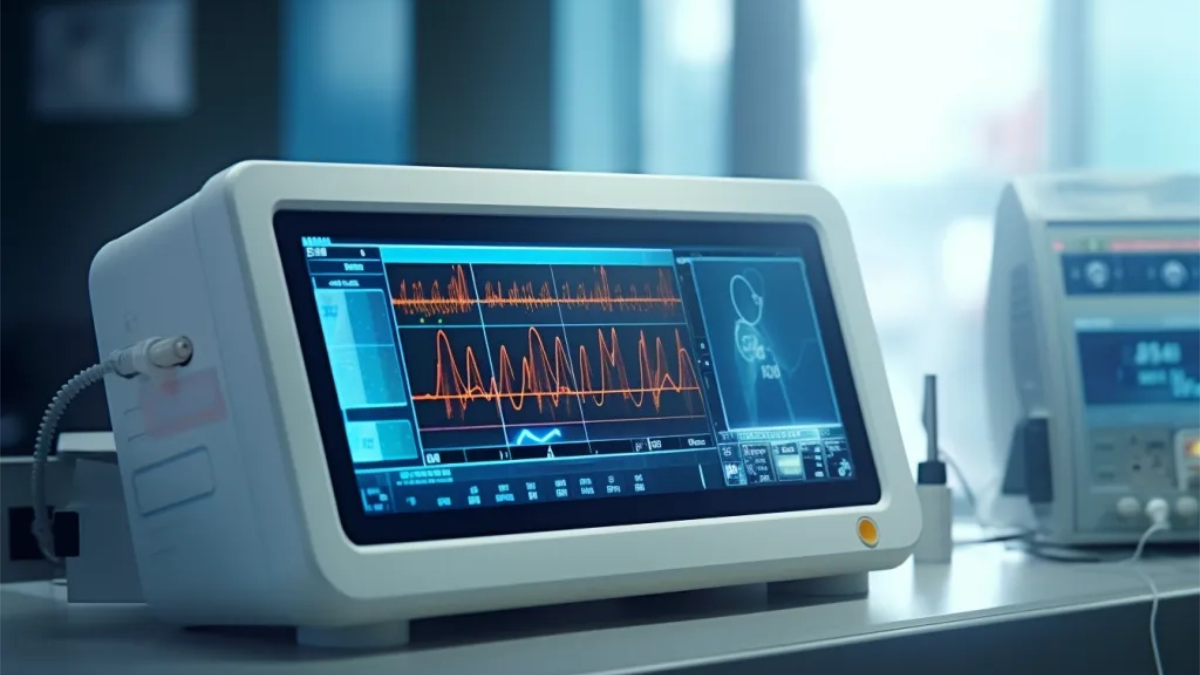
ECG machines, blood‑pressure monitors, ultrasound diagnostic systems, ventilators, anaesthesia machines… Common hospital‑used medical devices share one key attribute: they are Medical Electrical (ME) Devices. Before entering global markets, they must pass a critical safety threshold — IEC 60601‑1 testing.
01 What is the IEC 60601‑1 Standard?
IEC 60601‑1 is the general safety standard for medical electrical devices published by the International Electrotechnical Commission (IEC). Its full title is Medical electrical equipment — Part 1: General requirements for basic safety and essential performance.
First released in its 3rd edition in 2005, the standard has undergone two amendments: Amendment A1 (2012) and Amendment A2 (2020). The currently valid version is 3.2 (IEC 60601‑1:2005 + AMD1:2012 + AMD2:2020 CSV). IEC has set its stability date for 2028.
Its corresponding Chinese national standard is GB 9706.1‑2020, a mandatory standard in China. This means medical electrical devices sold within mainland China must also satisfy its requirements.
02 Core Evolution: From “Electrical Safety” to “Basic Safety + Essential Performance”
Compared with earlier editions, the 3rd edition of IEC 60601‑1 brings a fundamental shift in philosophy.
Traditional electrical‑safety standards focused largely on physical hazards such as electric‑shock prevention and overheating protection. IEC 60601‑1 expands requirements into two dimensions: basic safety and essential performance.
Basic Safety: Absence of unacceptable risk arising from direct physical hazards when the equipment is operated under normal and single‑fault conditions.
Essential Performance: Minimum functional capabilities of the device; loss or degradation of these functions may result in unacceptable risk.
Most importantly, the standard formally integrates risk management (per ISO 14971) into its safety framework. Manufacturers shall identify foreseeable hazards, assess risk levels, and demonstrate the effectiveness of risk‑control measures via design verification. Risk management is no longer optional; it is a mandatory requirement running through the entire product lifecycle.
03 Product Scope for IEC 60601‑1 Testing
IEC 60601‑1 applies to Medical Electrical (ME) Devices and Medical Electrical (ME) Systems. In simple terms, products fall within its scope if they:
Connect to mains power or contain an on‑board power supply;
Are intended for patient diagnosis, therapy, or monitoring;
Qualify as medical electrical equipment.
Typical covered products
Monitoring & diagnostic: ECG machines, blood‑pressure monitors, ultrasound diagnostic systems, EEG machines
Therapy & life support: ventilators, anaesthesia machines, infusion pumps, haemodialysis machines, high‑frequency electrosurgical units, defibrillators
Imaging: medical X‑ray equipment, CT scanners, MRI systems
Patient care: infant incubators, medical suction units
Exclusions to noteThe IEC 60601 series does not apply to in‑vitro diagnostic devices (covered under IEC 61010) or the implanted portions of active implantable medical devices. These product categories follow their own dedicated‑standard frameworks.
04 Main Test Items
IEC 60601‑1 covers an extensive test suite, grouped as follows:
Electrical Safety Tests (Core)
Leakage‑current test: earth leakage current, enclosure leakage current and patient leakage current. Limits vary according to applied‑part classification (Type B, Type BF, Type CF), with the strictest limits for Type CF (cardiac‑connected applications).
Dielectric‑strength (hipot) test: verifies insulation resistance to electrical breakdown.
Protective‑earth impedance test: validates continuity of protective‑earthing connections; protective‑earth impedance is generally required ≤ 0.2 Ω (Clause 18 of IEC 60601‑1).
Clearance and creepage‑distance measurement.
Mechanical and Environmental‑Safety Tests
Mechanical‑strength testing, stability testing (anti‑tipping assessment), enclosure‑ingress‑protection rating testing, strain‑relief / cord‑pull tests, and insulation‑performance verification after humidity preconditioning.
Abnormal‑Condition and Reliability Tests
Validation of protective mechanisms under abnormal operating conditions including short‑circuits, open‑circuits and component overloads. Additional tests cover mains‑voltage‑variation tolerance, temperature‑rise evaluation, and battery short‑circuit‑protection performance.
05 Testing Workflow
A formal IEC 60601‑1 assessment follows these key phases:
Phase 1: Pre‑work and risk‑management‑file developmentManufacturers shall establish risk‑management documentation in accordance with ISO 14971, define the device’s essential‑performance metrics and set acceptable risk limits. This is a prerequisite before testing commences.
Phase 2: Test‑plan developmentDefine equipment configurations, operating modes, acceptance criteria and test‑environment conditions. Regulatory bodies such as the FDA pay close attention to this document during technical reviews.
Phase 3: Formal laboratory testingComplete the full scope of electrical‑safety, mechanical‑safety and environmental‑adaptability tests at a qualified laboratory (e.g., a CBTL laboratory).
Phase 4: Test reporting and corrective actionsIssue the formal test report. Where non‑conformances are identified, manufacturers implement corrective actions followed by re‑verification testing.
06 Timeline & Cost Reference
Testing timeline: CBTL‑accredited laboratories typically complete certification testing within 10 to 14 working days. Timelines extend if corrective actions or supplementary testing are needed. Standard CB certification testing normally takes 10‑20 working days.
Cost notes: Costs depend primarily on product complexity, test‑item scope and required corrective‑action cycles. Test workload varies significantly between simple monitoring devices and complex therapeutic equipment. Quotations are generated based on specific product parameters.
07 Our Service Offerings
As an independent third‑party testing laboratory, we deliver comprehensive IEC 60601‑1 testing services for medical‑device manufacturers:
Accreditation credentials: CMA, CNAS (L15898), IAS accreditations; reports are nationally recognised and internationally mutually‑recognised.
Full‑scope testing: complete test coverage including leakage‑current, hipot, protective‑earth impedance, mechanical strength, stability and other mandatory items.
End‑to‑end project support: risk‑management‑document guidance, test‑plan drafting, sample testing and final‑report issuance, one‑stop solution.
Specialist technical team: extensive experience in electrical‑and‑medical‑device testing, familiar with mechanical architectures and commonly‑seen non‑conformances for all classes of active medical devices.