1. Overview of CO2 Laser Marking Machine Applications
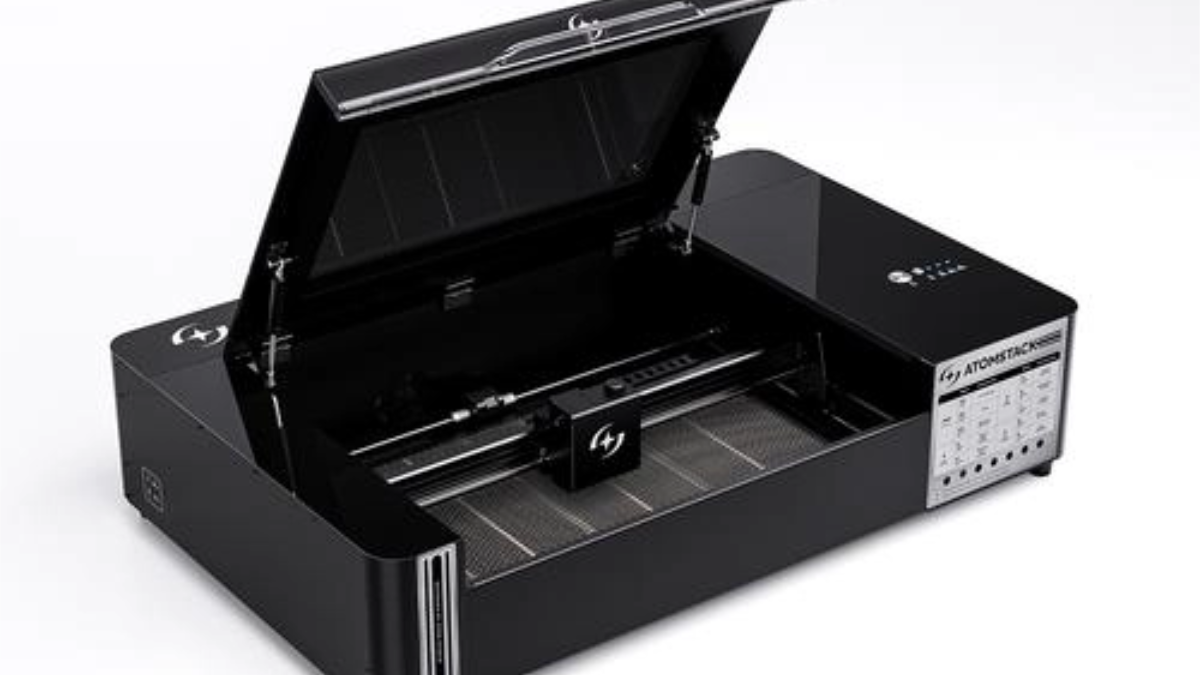
CO₂ laser marking machines are industrial laser identification equipment that use carbon dioxide gas as the laser medium. Excited by a high‑voltage electric field, CO₂ molecules generate infrared laser beams with a fixed wavelength of 10.6 μm. This laser wavelength features extremely high absorption rates for non-metallic materials.
CO₂ laser markers deliver outstanding performance for permanent marking, engraving and cutting on wood, paper, plastic, leather, glass, ceramic, rubber and other non-metallic materials. Widely adopted in Industry 4.0 intelligent manufacturing, they have become core equipment for product traceability, brand marking, anti-counterfeiting and cross-region sales control.
Common industrial applications include production date coding on food packaging, logo marking on electronic enclosures, batch coding on beverage caps, and traceability codes for pharmaceutical packaging. Compared with traditional inkjet printing, CO₂ laser marking is ink-free, pollution-free, consumable-free, highly durable and supports 24-hour continuous operation, effectively reducing manufacturers’ production and operating costs.
However, CO₂ laser marking machines adopt high-energy laser sources. Most industrial-grade CO₂ laser markers operate at tens of watts or higher power levels. Direct or reflected laser beams can cause severe eye injuries and even ignite flammable materials. Therefore, IEC 60825-1 laser safety testing and certification is a mandatory market access requirement to ensure operator safety and global export compliance.
2. IEC 60825-1 Laser Safety Standard Introduction
IEC 60825-1 is the core international safety standard for all laser products, officially titled Safety of laser products – Part 1: Equipment classification and requirements. It applies to laser devices with wavelengths ranging from 180 nm to 1 mm. The latest stable version is IEC 60825-1:2014, valid until 2027.
The standard establishes a unified global laser hazard classification system based on laser wavelength, output power, pulse characteristics and emission duration. It mandates manufacturer safety documentation, standardized laser warning labels, user manual hazard instructions, and protective structure design to minimize accessible laser radiation.
Laser product hazard classes include Class 1, Class 1M, Class 2, Class 2M, Class 3R, Class 3B and Class 4. Most industrial CO₂ laser marking machines are classified as Class 4 laser products, the highest hazard level. Class 4 laser devices require strict radiation parameter testing and comprehensive engineering protection assessment.
Corresponding regional standards include GB/T 7247.1 (China) and EN 60825-1 (EU). IEC 60825-1 test reports serve as the fundamental compliance basis for CE laser certification, FDA laser registration and global market entry.
3. Core IEC 60825-1 Test Items for CO2 Laser Marking Machines
IEC 60825-1 testing for CO₂ laser markers is a full-scale safety compliance assessment covering laser radiation performance, mechanical protection structure, safety interlock system and label compliance.
3.1 Laser Radiation Parameter Testing
Professional optical darkroom testing accurately measures core parameters including laser output power, energy density, pulse duration and central wavelength to determine the device’s Accessible Emission Limit (AEL). Testing instruments include spectroradiometers, laser power meters and integrating spheres to ensure precise and repeatable data.
3.2 Laser Safety Classification Judgment
Based on measured radiation data, testers confirm the final laser hazard class of the equipment. Due to high-power infrared laser output, industrial CO₂ laser marking machines are almost exclusively classified as Class 4 laser products.
3.3 Engineering Protection Structure Inspection
Inspect the integrity of laser protective enclosures, verify the effectiveness of safety interlock systems (automatic power cut-off when housing doors open), beam terminators and laser shutter functions. For Class 4 laser equipment, additional verification of housing flame resistance and interlock switch reliability is mandatory.
3.4 Laser Label & User Manual Review
Audit laser warning labels for standardization, including laser class, wavelength and maximum output power information. Review user manuals for complete safety operating guidelines, hazard warnings and maintenance instructions to meet global regulatory requirements.
4. Standard IEC 60825-1 Testing Process for CO2 Laser Marking Machines
Step 1: Technical Consultation & Pre-Assessment
Submit product specifications, circuit diagrams and user manuals. Professional engineers pre-judge the laser class and confirm the official test conditions (1–2 working days).
Step 2: Service Contract Confirmation
Confirm test standards, test items, project cycle and service fees.
Step 3: Sample & Technical Document Submission
Deliver mass-production prototype machines (1–2 units) and complete technical files, including schematic diagrams, PCB layout drawings, laser component datasheets and label drafts.
Step 4: Full Laboratory Testing & Non-Conformity Rectification
Complete optical radiation testing and safety structure assessment in a professional optical darkroom. Provide professional rectification guidance for any non-compliant items.
Step 5: Official Test Report Compilation
Organize test data and generate formal IEC 60825-1 test reports with CNAS/CMA accreditation.
Step 6: Report Delivery & Compliance Guidance
Provide electronic and paper reports, together with one-stop global market compliance guidance.
5. IEC 60825-1 Testing Cycle
For fully compliant mass-production samples with complete documents, the standard test cycle is 7 working days.
Expedited testing is available with a 3-working-day fast track service.
For complex optical systems or products requiring structural modification, the total cycle is approximately 15 working days.
Note: Only final mass-production equipment is accepted for testing. Engineering prototypes may cause inaccurate test results and invalid certification data.
6. Professional IEC 60825-1 Testing Laboratory — CTNT
Shenzhen CTNT Testing Technology Co., Ltd. is a professional third-party laser testing and certification institution with CNAS and CMA qualifications.
CTNT owns advanced professional laser laboratories with fully imported testing equipment. The power measurement range covers pW to 5 kW, and pulse testing precision reaches the picosecond (ps) level. With more than 10 years of laser product testing experience, CTNT supports over 70 laser-related accredited standards and has served more than 5,000 manufacturing enterprises worldwide.
Available services cover:
IEC 60825-1 / EN 60825-1 / GB/T 7247.1 laser safety testing
Laser CE certification
Laser FDA registration and testing
Full-process technical rectification and compliance guidance
CTNT provides high-efficiency, stable and reliable one-stop laser compliance solutions, helping CO₂ laser marking machine manufacturers achieve rapid global market access.