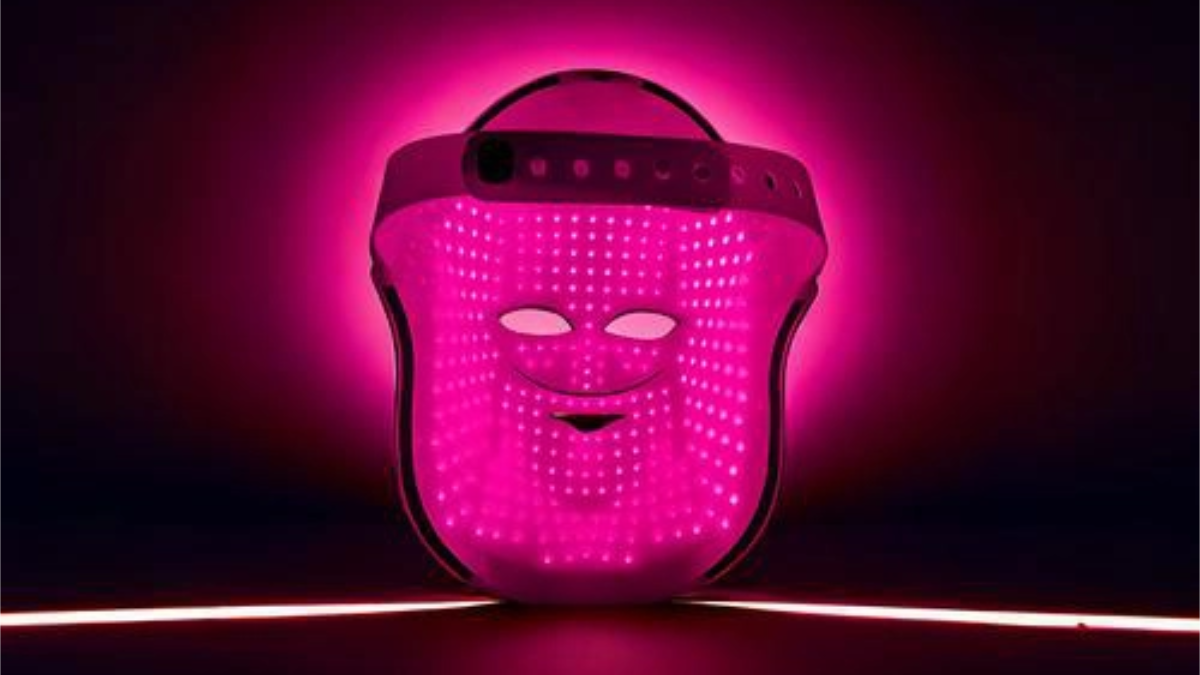
The market for LED light therapy masks is expanding rapidly. Forecasts indicate that the market size in 2030 will be nearly double that of 2024, with an increase of approximately USD 769 million. Red, blue, amber and other wavelengths of light are applied for anti-aging, acne treatment, sensitive skin soothing and other skincare purposes.
However, safety concerns emerge: are these lights shining directly onto facial skin safe?
A comparative test on beauty masks conducted by the Consumer Council of Guangdong Province in 2025 recruited 12 volunteers for a 28-day standardized trial. Positive changes were observed in skin moisturization, brightening and soothing repair. Meanwhile, the test revealed massive discrepancies in radiant exposure among different samples, ranging from as low as 2.7 W/m² up to 951 W/m². The optical parameters of these products vary widely.
Uncontrolled optical radiation intensity carries potential safety hazards. Professional photobiological safety testing, which evaluates optical radiation levels under worst-case operating conditions, serves as the core basis to judge product safety.
01 Photobiological Safety Risks of Light Therapy Masks
The safety of light therapy masks depends on product design quality and optical radiation control.
From the perspective of electrical safety, the 12 samples tested by the Consumer Council of Guangdong Province only had a maximum temperature rise of 3K to 6K under normal operation, far below the 50K limit specified in standards. The risk of scalding is low, and items including protection against electric shock all complied with national standards.
From the photobiological safety perspective, risks mainly fall into two categories:
Blue light hazard: Excessively strong blue light may penetrate the crystalline lens and reach the retina. Long-term exposure poses a risk of macular degeneration.
Ultraviolet leakage: May trigger skin erythema and photoaging.
In terms of material safety, polycyclic aromatic hydrocarbons (PAHs) were detected in 3 samples. Long-term excessive exposure to this substance may harm human health.
Well-manufactured products that have passed certification are safe under normal use. In contrast, low-cost, unregulated products may exceed optical radiation limits.
02 Core Testing Standards
IEC 62471 / EN 62471 / GB/T 20145IEC 62471 (corresponding to EU EN 62471 and China GB/T 20145) is the core standard for photobiological safety. It covers optical radiation from 200 nm to 3000 nm and applies to all lamps and lamp systems excluding laser sources.
The standard classifies optical radiation hazards into four risk groups:
RG0 (Exempt Risk Group): No hazard
RG1 (Low Risk Group): Safe under normal use conditions
RG2 (Moderate Risk Group): Protective precautions required
RG3 (High Risk Group): Significant hazards exist
For LED beauty masks, the general compliance requirement is RG0 (Exempt Risk Group), meaning no optical radiation hazard under any reasonably foreseeable conditions.
IEC 60335-2-27This is the dedicated safety standard for household appliances exposing skin to ultraviolet and infrared radiation, to be used together with IEC 60335-1. It applies to single-phase appliances with rated voltage up to 250 V, covering photobiological safety, electrical safety, mechanical safety, marking and instructions.
IEC 60601-2-57For professional light therapy devices classified as medical devices, IEC 60601-2-57 shall be referenced.
03 Core Test Items
Under IEC 62471 / GB/T 20145, photobiological safety testing for beauty masks and light therapy masks includes the following key items:
Retinal Blue Light Hazard
This is the most critical test item. Blue light falls within 400 nm–500 nm. For RG0 compliance, the weighted radiance shall be ≤100 W·m⁻²·sr⁻¹. The test simulates eye exposure when directly viewing the light source, with an imaging system to precisely control the field of view for measurement.
Ultraviolet Radiation Hazard
Covers the 200 nm–400 nm band. Products shall have no UV leakage or irradiance ≤0.0001 W/cm² to prevent skin erythema and photoaging.
Infrared Radiation Hazard
Covers 780 nm–3000 nm, assessing thermal risks of corneal and lens burns, with a typical limit ≤10 mW/cm².
Retinal Thermal Hazard
Evaluates thermal damage to the retina caused by visible and infrared radiation.
Test operating condition confirmation: Tests must be performed under worst-case conditions, for instance, with red light and infrared light activated at maximum brightness. Verification shall cover continuous-wave and pulsed modes to ensure safety.
04 Application Procedure
Step 1: Requirement communication & test plan confirmationDefine product type, target markets and applicable standard versions with the testing laboratory. The lab will formulate a test plan and quotation accordingly.
Step 2: Document preparation & sample submissionEnterprises need to submit product manuals, circuit diagrams, LED datasheets and control parameters (pulse frequency, duty cycle). Normally 2–3 fully functional prototypes are required.
Step 3: Laboratory testingMeasurements are carried out in a darkroom using a spectroradiometer, including irradiance testing (simulating skin exposure) and radiance testing (simulating direct eye exposure), covering wavelengths from 200 nm to 3000 nm.
Step 4: Data analysis & risk group classificationSpectral data is processed with dedicated algorithms for convolution calculation based on IEC 62471 hazard weighting functions to determine the RG risk group.
Step 5: Report issuanceOnce testing is passed, the laboratory issues an official test report stamped with CMA, CNAS and other recognized accreditations.
05 Lead Time & Cost Reference
Testing lead time: Standard turnaround for photobiological safety testing is 7–15 working days. Masks with a single light source can be completed in as fast as 5 working days. Products with multi-wavelength RGB light or complex pulsed modes usually take 7–10 working days. Expedited service is available for urgent shipments, with reports ready in 3 working days at the earliest.
Cost: The cost depends mainly on light source types (single / multi-wavelength), operating modes (continuous / pulsed) and test item scope. Quotation is assessed based on specific product parameters.
Recommendation: Conduct pre-testing at the R&D stage to avoid delays to product launch due to non-compliance.
06 Our Services
As an accredited third-party optical testing laboratory, we provide comprehensive photobiological safety testing services for beauty masks and light therapy masks:
Accreditation: CMA, CNAS and IAS accredited laboratory with internationally recognized reports
Precision equipment: High-performance spectroradiometers, imaging colorimeters, UV/visible/IR radiometers for accurate measurement of spectral distribution, irradiance and radiance
Full-scope testing: Retinal blue light hazard, UV radiation hazard, infrared radiation hazard, retinal thermal hazard and other required items
Standard coverage: IEC 62471, EN 62471, GB/T 20145 and IEC 60335-2-27
End-to-end support: Regulatory consultation, pre-testing, formal testing and certification application, one-stop service
Multi-market compliance: Professional support for market access requirements for EU, US, UK, Australia and other major global markets