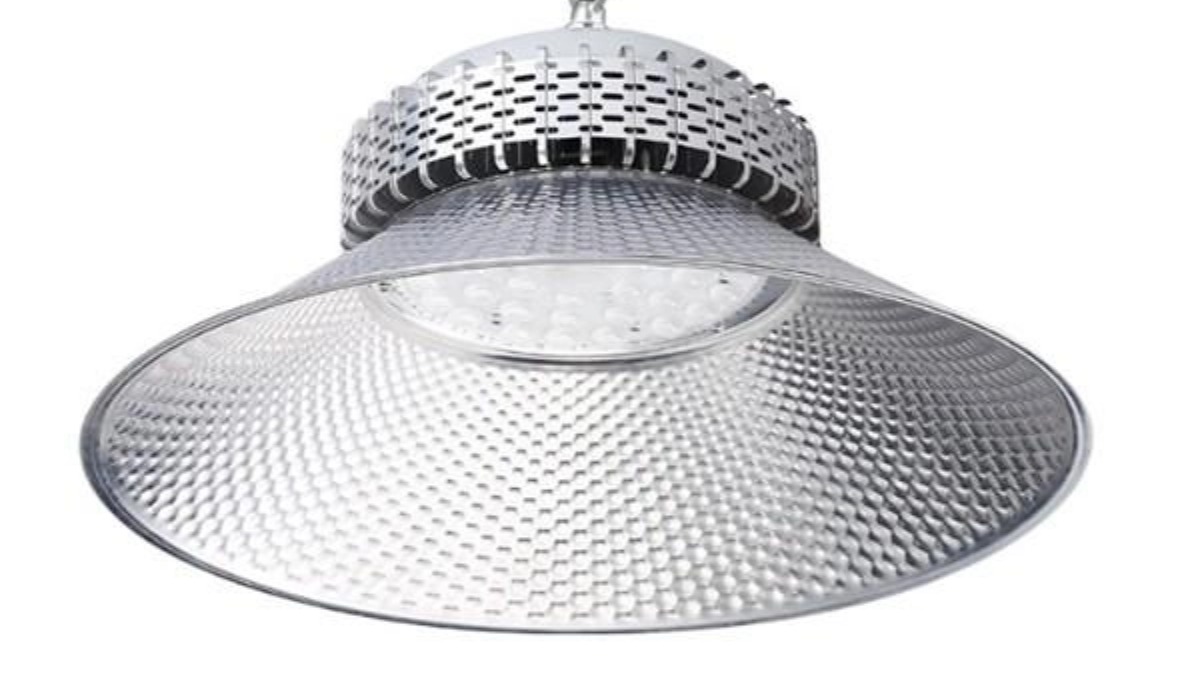
As an important category of high-intensity discharge (HID) lighting, metal halide lamp luminaires are widely deployed in sports stadiums, industrial workshops, parking lots and large commercial spaces. U.S. federal regulations set clear energy efficiency requirements for metal halide lamp luminaires and their associated ballasts. Products targeting the U.S. market must complete DOE certification and meet corresponding efficiency standards.
1. Overview of DOE Certification and Applicable Regulations
DOE certification is a mandatory energy efficiency certification program established by the U.S. Department of Energy (DOE) under the Energy Policy and Conservation Act. For metal halide lamp luminaires, the core applicable energy efficiency standard is 10 CFR 430.32(dd) (referenced as paragraph (gg) in the statute text), which specifies the minimum efficiency requirements for ballasts integrated within metal halide lamp luminaires. Registration requirements and sampling plans follow 10 CFR 429.54, which defines statistical sampling schemes and certification reporting requirements specifically for metal halide lamp ballasts and luminaires.
A critical clarification: The DOE has not established energy efficiency standards or test procedures for HID lamps themselves, including metal halide lamps, high-pressure sodium lamps and mercury vapor lamps. In its 2015 final determination, DOE concluded that setting energy efficiency standards for HID lamps was technically infeasible or economically unreasonable. Therefore, HID lamps alone are not subject to DOE energy efficiency regulations. The DOE regulates metal halide lamp luminaires (with integrated ballasts) and standalone metal halide lamp ballasts.
2. Scope of Applicable Products
DOE certification applies to the following metal halide lamp luminaires and ballast products:
Metal halide lamp luminaires: General lighting fixtures designed to operate with metal halide lamps and matching ballasts.
Metal halide lamp ballasts: Devices that start and operate metal halide lamps.
Applicable power range: Luminaires designed for metal halide lamps with a rated power of ≥150 W and ≤500 W must satisfy the ballast efficiency criteria laid out in 10 CFR 430.32(dd).
Products Excluded: High-pressure sodium lamps and mercury vapor lamps (the lamps themselves) are outside the scope of DOE energy efficiency standards. For high-pressure sodium or mercury vapor lamp luminaires, compliance status must be reviewed case-by-case for other applicable DOE regulations.
3. Core Energy Efficiency Standard: 10 CFR 430.32(dd)
10 CFR 430.32(dd) stipulates minimum efficiency values for ballasts used in metal halide lamp luminaires. Luminaires must incorporate one of the three ballast types listed below:
Pulse-start metal halide ballast: Minimum ballast efficiency of 88%
Magnetic probe-start ballast: Minimum ballast efficiency of 94%
Non-pulse start electronic ballast: 92% minimum efficiency for power >250 W; 90% minimum efficiency for power ≤250 W
Ballast efficiency formula:
Efficiency = Measured lamp output power (Pₒᵤₜ) ÷ Measured ballast input power (Pᵢₙ)
Exempt luminaires that do not need to comply with the above standards:
Luminaires equipped with regulating lag ballasts
Luminaires fitted with electronic ballasts rated for 480 V operation
Luminaires meeting all of the following criteria: rated exclusively for 150 W lamps; intended for wet locations per NEC 2002 Section 410.4(A); and containing ballasts rated to operate above 50 °C ambient temperature per UL 1029-2001
4. Core Test Method: 10 CFR 430.23(gg)
Energy efficiency testing for metal halide lamp luminaires shall be performed in accordance with the test procedures specified in 10 CFR 430.23(gg). This test method references ANSI standards and defines test conditions, instrument accuracy and data acquisition requirements for ballast efficiency measurement.
4.1 Reference Standards
The test adopts relevant clauses from ANSI C82.6-2005, including lamp stabilization requirements (Clause 4.4) and power measurement accuracy specifications (Clause 4.5). Lamps and capacitors (if fitted) shall form a nominal system complying with ANSI C78.43-2004.
4.2 Test Conditions
Ballast efficiency testing must be carried out on a complete system consisting of the ballast paired with its matching lamp. For 60 Hz ballasts, Pᵢₙ and Pₒᵤₜ shall be measured after the lamp stabilizes in accordance with ANSI C82.6-2005 Clause 4.4, using a power meter meeting the accuracy requirements in Clause 4.5 of the same standard. For ballasts operating above 60 Hz, power measurement shall maintain a basic accuracy of ±0.5% at either three times the ballast output operating frequency or 2 kHz, whichever is higher.
4.3 Measurement of Output and Input Power
While the lamp operates under stable conditions, measure the actual lamp working power (Pₒᵤₜ) and actual ballast input power (Pᵢₙ) separately. Measurements must be taken with a calibrated power analyzer to guarantee reliable data.
4.4 Efficiency Calculation & Pass/Fail Judgement
Calculate ballast efficiency percentage by dividing measured Pₒᵤₜ by Pᵢₙ, then compare the result against the minimum efficiency limit corresponding to the ballast type specified in 10 CFR 430.32(dd).
5. Registration Requirements: 10 CFR 429.54
10 CFR 429.54 defines sampling plans and certification requirements for metal halide lamp ballasts and luminaires.
Sample quantity: No fewer than 4 units shall be randomly selected for testing for each basic model of metal halide lamp ballast.
Rules for declaring representative values:
The declared estimated ballast efficiency (calculated as measured output power / measured input power) shall be no higher than the lower of the two values below:
Sample mean
99% confidence lower bound of the true mean divided by 0.99
This rule ensures the declared energy efficiency value is conservative and does not overstate actual product performance.
Content of certification report: The report must include the minimum ballast efficiency (percentage), lamp wattage, ballast type (e.g., pulse-start, magnetic probe-start, non-pulse start electronic ballast) and other public product information.
6. Certification Process & Timeline
Product Evaluation: Confirm luminaire configuration and matching ballast type, verify applicable efficiency limits.
Technical Document Preparation: Collate product datasheets, ballast technical parameters, lamp compatibility statements and other documentation.
Sample Submission & Testing: Conduct full ballast efficiency testing following 10 CFR 430.23(gg).
Report Issuance: Laboratory reviews raw data and issues an official test report compliant with DOE requirements.
CCMS Portal Registration: Submit product information and test report via the official DOE CCMS system per 10 CFR 429.54 to complete registration.
Timeline: The testing phase takes approximately 5–7 working days; CCMS registration review takes 1–2 weeks. The overall lead time is about 2–3 weeks.
7. Recommended Professional Testing Laboratory
Shenzhen Zhongwei Inspection Technology Co., Ltd. (CTNT) is an authoritative third-party laboratory specializing in lighting energy efficiency certification. It holds CMA qualification and CNAS laboratory accreditation, with extensive experience in DOE certification for metal halide lamp luminaires and ballasts.
Our testing scope covers all ballast efficiency test items required under 10 CFR 430.23(gg). We are familiar with sampling requirements in 10 CFR 429.54 and the full CCMS registration workflow. Beyond DOE certification, we also provide Canada NRCan certification and other global energy efficiency compliance services. We deliver one-stop service from testing to registration to help manufacturers efficiently achieve export compliance.
For more details regarding DOE certification for metal halide lamp luminaires, contact Shenzhen Zhongwei Inspection Technology Co., Ltd. (CTNT) for professional compliance consultation and precise quotation.