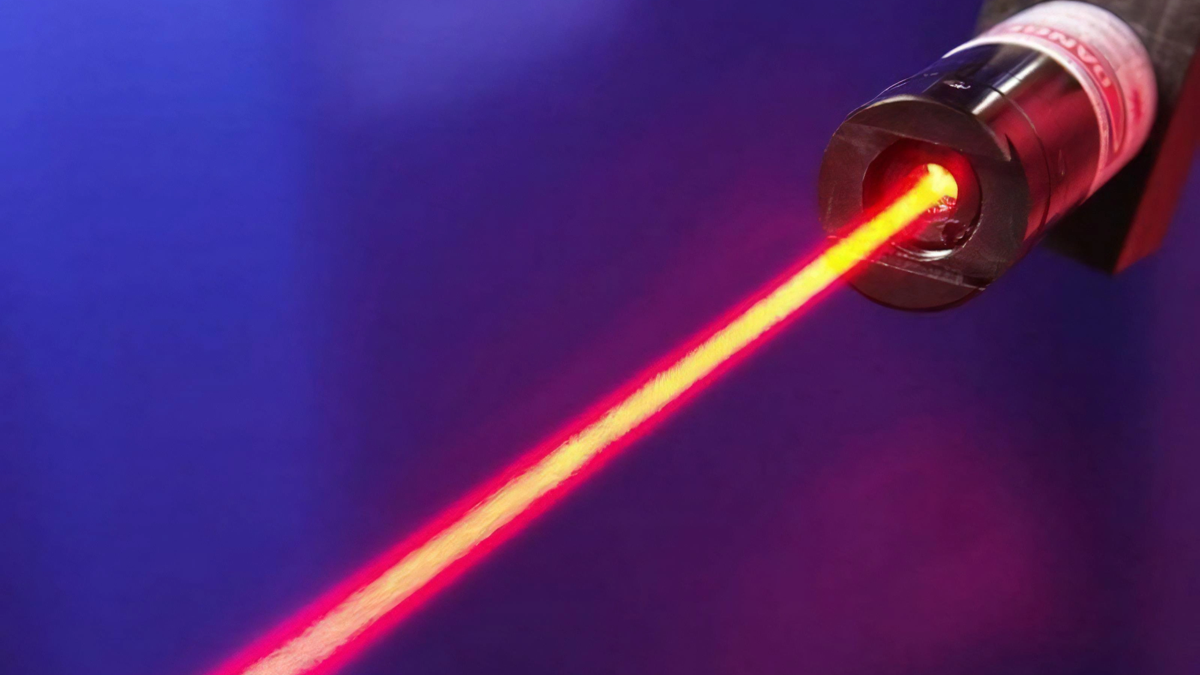
Laser heads serve as the core components of laser‑based equipment and are widely used in industrial processing, medical surgery, communication transmission, consumer electronics, autonomous driving and other sectors. They can be found in laser marking machines, laser cutting heads, ToF ranging modules, LiDAR units and numerous other devices.
Nevertheless, laser radiation can cause irreversible damage to human eyes and skin. Therefore, safety‑class testing for laser heads has become a critical prerequisite for global‑market access.
01 Overview of IEC 60825‑1
IEC 60825‑1 is the fundamental safety standard for laser products published by the International Electrotechnical Commission, covering laser products with wavelengths ranging from 180 nm to 1 mm. Based on precise measurements of laser output power, wavelength, pulse characteristics and other parameters, the standard assigns laser products into seven safety classes and defines corresponding safety‑protection and marking requirements for each class.
02 Core Test Contents
Safety‑class testing for laser heads mainly includes the following items:
Radiation Parameter Measurement
Output power / energy: Determination of Accessible Emission Limit (AEL)
Wavelength: For laser‑class assignment and assessment of eye‑exposure hazards
Beam divergence angle: Evaluation of focusing performance and radiation distribution
Pulse characteristics: Pulse width and repetition rate (for pulsed lasers)
Safety‑Function Evaluation
Protective housing integrity: Verify whether enclosures effectively prevent human access to hazardous laser radiation
Safety interlock devices: Confirm automatic laser shutdown upon protective‑housing opening
Key‑operated controls: Prevent unauthorised operation
Beam attenuators: Verify emergency cut‑off performance
Label and Instruction‑Manual Review
Check whether laser warning labels comply with standard requirements in terms of format, content and placement, and verify that user manuals contain sufficient safety‑related information.
Environmental Reliability Test (where applicable)
Evaluate radiation stability under varying temperature and humidity conditions.
03 Complete Testing Workflow
The full certification workflow consists of five stages:
Stage 1: Consultation and EvaluationThe manufacturer submits basic product information to the testing laboratory. The laboratory assesses product type, expected safety class and applicable standards, and both parties confirm the test scheme.
Stage 2: Technical‑document PreparationManufacturers shall compile technical specifications, circuit schematics and PCB layout drawings, laser‑component datasheets, product structural drawings, laser‑warning‑label drafts, user manuals, and bill of materials for critical components.
Stage 3: Sample Submission and Laboratory TestingRepresentative samples are delivered to the laboratory for radiation‑parameter measurement and safety‑class determination. Compliance of safety interlocks, protective housings, labels and other features is verified.
Core requirement: Dual assessment under normal operating conditions and single‑fault conditions is generally mandatory, to ensure the unit never exceeds the Accessible Emission Limit (AEL).
Stage 4: Report Compilation and Non‑conformity RemediationIn case of non‑conformities, the laboratory provides technical guidance for product improvement followed by retesting. Upon successful testing, an IEC 60825‑1 test report in standard TRF format is issued.
Stage 5: After‑service SupportIssue compliance reports or certificates, and support manufacturers for market‑surveillance inspections and customer audits.
04 Testing Lead Time
Standard turnaround time is 7‑15 working days. Key influencing factors include:
Product complexity: Longer test durations for multi‑wavelength combined‑beam units, pulse‑modulated devices or Class 4 laser heads
Remediation requirements: Extra lead‑time for redesign and retesting caused by design defects such as housing light leakage or interlock failure
Heat‑dissipation and stability requirements: High‑power laser heads require extended thermal‑conditioning time
Expedited service is available with a minimum turnaround of 3 working days, subject to sample conditions.
05 Our Service Scope
As a professional third‑party laser‑testing laboratory, we deliver the following services for IEC 60825‑1 safety‑class testing of laser heads:
Accreditation credentials: CNAS‑ and CMA‑accredited laboratory; over 70 authorised laser‑related standards and more than 120 measurable parameters.
Full‑parameter testing: Measurement of power / energy, wavelength, beam divergence angle, pulse characteristics and Accessible Emission Limit (AEL).
Safety‑function validation: Testing for protective housings, safety interlocks, key‑operated controls, beam attenuators and other safety mechanisms.
Full‑class coverage: One‑test classification from Class 1 up to Class 4.
End‑to‑end one‑stop service: Document pre‑review, sample testing, non‑conformity remediation support and final report issuance.
Comprehensive standard coverage: GB/T 7247.1, EN 60825‑1 testing and FDA certification services are also available.