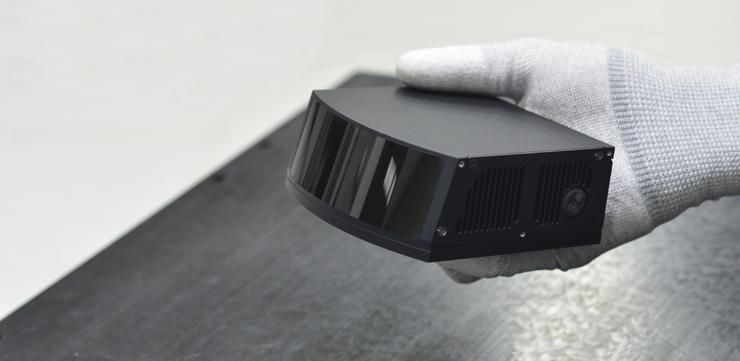
Class 1 certification is not an optional bonus feature for LiDAR devices; it is a mandatory market access prerequisite for automotive and consumer-grade LiDAR products. Fundamentally, this certification verifies compliance with the Accessible Emission Limit (AEL) for eye safety. It enables hardware to operate at the highest feasible optical power, striking a critical engineering balance between long-range detection performance and regulatory compliance.
1. Why Class 1 Serves as the Non-Negotiable Baseline for LiDAR
1.1 The Inherent Safety Dilemma of LiDAR
LiDAR systems pursue extended detection range and improved signal-to-noise ratio, which naturally drives design teams to boost transmitting optical power. However, the human retina is extremely vulnerable. Light within the visible to near-infrared spectrum (400 nm–1400 nm) passes through the cornea and converges onto the retina, potentially causing irreversible thermal or photochemical damage.
The International Electrotechnical Commission (IEC) categorizes laser products from Class 1 through Class 4 based on AEL thresholds. Class 1 defines inherently safe lasers: under all foreseeable operating conditions, including use with optical magnifiers such as telescopes or loupes, the laser emission poses no risk of bodily injury.
1.2 Mandatory Market Entry Requirements
Without valid Class 1 certification, automotive LiDAR cannot be sold in the EU (CE marking), the United States (FDA requirements) or China (GB standards). China’s GB/T 7247.1-2024 is fully identical to IEC 60825-1:2014 and entered into force in April 2025, closing the transitional compliance window.
A common misconception needs clarification: Class 1 compliance does not simply mean suppressing laser power to an ultra-low level. Instead, it maximizes performance while staying strictly within defined safety boundaries.
2. Core Regulatory Framework & Classification Principles for Class 1 LiDAR Certification
2.1 Global Standard Mapping
International baseline: IEC 60825-1:2014, covering wavelengths from 180 nm to 1 mm
Regional adoption: China GB/T 7247.1-2024 (identical standard); US FDA 21 CFR 1040.10; EU additionally requires EN 50689 supplementary rules for consumer laser products
Critical note: Class 1 assessment covers not only normal-operation eye safety, but also safety under single-fault conditions. Typical fault scenarios include stalled scanning mirrors and control-circuit failures that trigger full-power emission.
2.2 Wavelength Selection: Compliance Trade-offs Between 905 nm and 1550 nm
There are fundamental physical differences between the two mainstream wavelengths. 905 nm radiation penetrates the cornea and lens and focuses directly on the retina, presenting higher hazard potential. In contrast, 1550 nm light is largely absorbed by the cornea and lens and barely reaches retinal tissue. Under IEC rules, the Maximum Permissible Exposure (MPE) for 1550 nm lasers under Class 1 limits is significantly higher than for 905 nm variants.
This creates clear engineering trade-offs. For 905 nm LiDAR, single-pulse energy must be tightly constrained (often down to sub-microjoule levels for specific pulse durations), inherently limiting detection range. While 1550 nm laser sources carry higher component costs, this wavelength route makes it much easier to achieve long-range performance while maintaining Class 1 safety.
3. Class 1 Certification Test Scope: Measured Parameters & Pass/Fail Criteria
3.1 Key Radiometric Measurements
Tested optical characteristics include wavelength, peak power, average power, pulse duration, repetition rate and beam divergence angle.
Geometric and temporal corrections follow worst-case human-eye assumptions. Tests adopt a 7 mm aperture to simulate a dilated dark-adapted human pupil. Evaluation is performed at harsh near-field distances ranging from 100 mm to 1 m. Cumulative thermal hazards are calculated based on pulse duration and repetition frequency.
3.2 Fail-Safe & Single-Fault Validation
Class 1 certification is built on the premise that component failures will occur.
Test cases simulate failures such as malfunction of automatic power control (APC), scanning mechanism lock-up, and power surges. The LiDAR system must cut power or reduce output below Class 1 limits within a safe response window.
This is a frequent pitfall for early-stage LiDAR developers. Testing only fully functional samples and skipping fault-injection testing will almost always result in certification delays or failure.
4. From Design to Certification: Implementation Best Practices
4.1 Compliance Built in at the Design Stage
Optical design: Control beam divergence and beam uniformity to avoid localized high-energy hotspots.
Circuit redundancy: Implement independent hardware over-current and over-power protection. Relying solely on software shutdown fails to satisfy independence requirements implied by functional safety.
Labelling & documentation: Product housings and user manuals must clearly state laser wavelength, Class 1 rating and warning statements such as “Do not stare into the beam.”
4.2 Certification Workflow & Timeline
Workflow: Pre-assessment of wavelength and power architecture → Sample submission to CNAS / ISO 17025 accredited laboratories → Radiological safety and fault testing → Test report issuance and Declaration of Conformity (DoC) compilation.
Timeline: Standard LiDAR takes roughly 7 working days. Complex automotive LiDAR combined with environmental reliability testing may extend the schedule to around 2 weeks.
5. Class 1 Certification Is the Starting Point, Not the Finish Line
Class 1 certification addresses market eligibility: it establishes the hard safety boundary for human eyes.
Beyond this compliance threshold, competitive differentiation lies in performance optimization — for example adopting 1550 nm technology or refined scanning architectures to extend detection range.
Looking ahead, LiDAR deployment is expanding from autonomous vehicles into robotics, intelligent transportation and other sectors. Supplementary assessment standards such as EN 50689 for non-automotive consumer use create new compliance variables. Manufacturers are advised to evaluate the full set of target-market standards in early R&D phases to avoid costly redesign caused by standard updates.