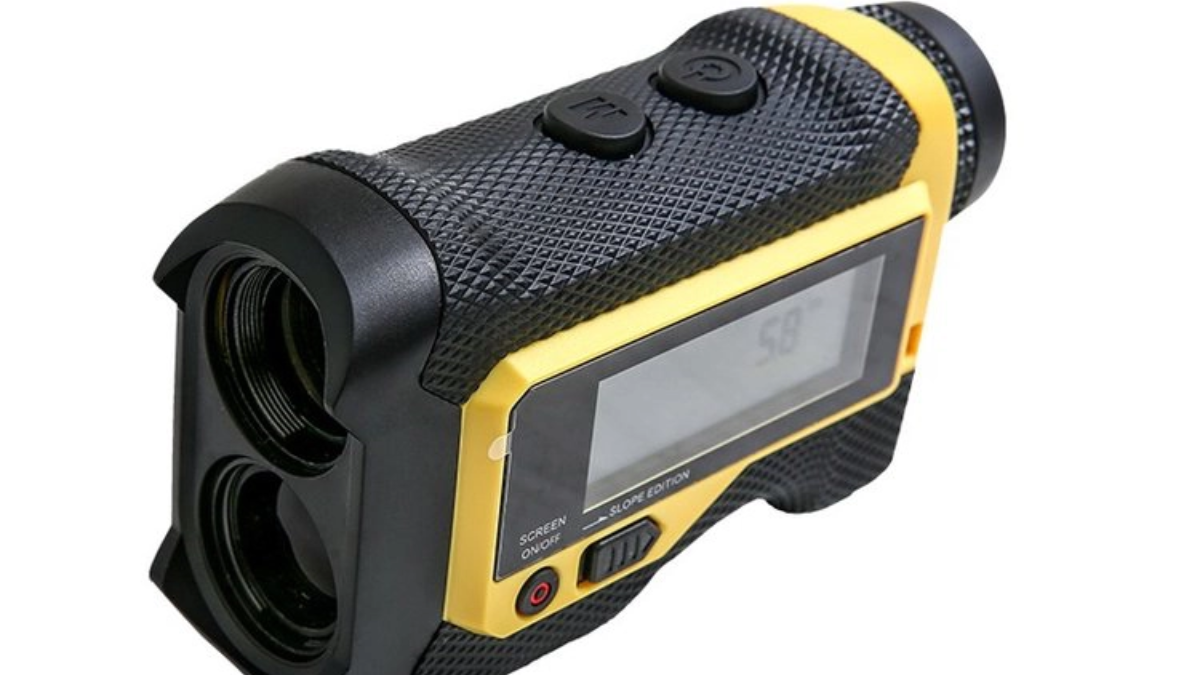
Laser rangefinders are widely adopted in construction, outdoor sports, power inspection, smart home and other sectors. As these products enter mass consumer markets, regulatory bodies are paying growing attention to the potential risks of laser radiation to human eyes. EN 60825-1 serves as the core European standard for laser product safety and constitutes a mandatory compliance hurdle for laser rangefinders seeking access to the EU market.
1. What is EN 60825-1?
EN 60825-1, formally titled Safety of laser products – Part 1: Equipment classification and requirements, is published by the European Committee for Electrotechnical Standardization (CENELEC). Its technical content is identical to the international standard IEC 60825-1.
This standard applies to all laser products emitting wavelengths between 180 nm and 1 mm. Its core objective is to control hazards of laser radiation to human eyes and skin through scientific classification and engineering requirements.
Products are categorized into multiple hazard classes based on laser radiation risks: Class 1 (safe under reasonably foreseeable operating conditions), Class 1M, Class 2, Class 2M, Class 3R, Class 3B and Class 4. Laser rangefinders are commonly designed for Class 1 or Class 3R. Class 1 means the product can be safely used without extra protective measures under normal operation.
The current enforceable version is EN 60825-1:2014+A11:2021, and this amendment was enforced across the EU on 21 June 2023.
2. EN 60825-1 Test Items for Laser Rangefinders
Safety class testing for laser rangefinders is more than simple power measurement; it is a systematic safety assessment covering the key modules below:
Measurement of laser radiation parameters forms the foundation of testing. Engineers use a spectrometer to accurately determine the central laser wavelength, and calibrated optical power / energy meters to measure output power or pulse energy. For pulsed rangefinders (typically at 905 nm or 1550 nm), pulse width, pulse repetition frequency are also measured, and time-averaged power is calculated.
Assessment of Accessible Emission Limit (AEL) is the core of the test. Based on measured wavelength, power and pulse characteristics, the readings are compared against AEL limits defined for each hazard class to calculate and confirm the product’s official safety classification.
Single-fault condition testing simulates potential single-point failures in the device, such as short-circuit or open-circuit of key electronic components and failure of laser drive circuits. It verifies whether laser output remains within the declared class limits under such fault scenarios.
In addition, label and marking review is required. Permanent, legible markings on the product body must indicate laser safety class, wavelength, maximum output power and declaration of conformity. Laser warning signs must comply with the standard in style, dimension and colour. User manuals shall include mandatory safety warnings and usage instructions.
3. Is EN 60825-1 Testing Mandatory?
EN 60825-1 testing is mandatory for products sold in the EU. Per EU legislation, EN 60825-1:2014/A11:2021 has been fully enforced since 21 June 2023. This standard is the primary basis for CE marking of laser products. Non-compliant goods may face recalls, fines or sales bans.
It is worth noting that consumer laser products must satisfy EN 50689:2021 (Safety of laser products – Particular requirements for consumer laser products) in addition to EN 60825-1. Stricter compliance rules apply for consumer-facing laser rangefinders.
For the Chinese market, GB/T 7247.1, the national standard identically adopted from IEC 60825-1, is also a key requirement for market access of laser products.
4. Documentation Required for EN 60825-1 Testing
Manufacturers shall prepare the following technical documents to initiate EN 60825-1 testing:
Detailed product specification (including laser wavelength, output power, operating mode, etc.)
Circuit schematic and PCB layout drawings
Laser component datasheet (laser diode / module wavelength and power characteristics)
Product structure drawings and dimension drawings
Label artwork draft (including laser warning labels)
Draft user manual
Bill of Materials (BOM) of critical components
Applicant and manufacturer information
For samples, normally 2–3 mass-production-ready units matching shipped finished products with power supply are required. Engineering prototypes or hand-made samples may lead to inaccurate test results.
5. EN 60825-1 Laser Rangefinder Testing Procedure
The standardized test workflow consists of five stages:
Document review & pre-assessment: The manufacturer submits product specs and circuit diagrams. Engineers preliminarily evaluate the potential safety class according to laser wavelength and power parameters.
Engineering verification & physical measurement: Precision optical parameter measurement and structural safety inspection are carried out in the laboratory.
Classification determination: The measured data is cross-referenced with AEL limits to formally assign the laser safety class.
Label and document audit: Review of product markings and user manual against requirements for the assigned class.
Test report issuance: Once all reviews pass, the formal test report is released.
6. EN 60825-1 Testing Lead Time
Standard testing turnaround is 7 working days. For simple products with complete documentation, regular service takes 5–7 working days, while expedited service can be shortened to 3 working days.
Actual lead time depends on multiple factors: multi-wavelength or adjustable-power products extend testing time due to extra test items. If design defects (e.g. light leakage from enclosure, interlock failure) are identified during pre-assessment, rectification and retesting will add an additional 5–10 working days. Laboratory peak booking seasons may also cause delays.
7. EN 60825-1 Testing Cost
Testing fees are not fixed; they depend mainly on laser hazard class and product complexity. Low-power consumer modules (Class 1 or Class 2 laser rangefinders) have fewer test items and lower costs. Mid-to-high power or multi-wavelength products require complex calculation of radiation hazard zones, resulting in higher charges.
When enquiring for quotation, manufacturers should request a clear breakdown of test items from testing bodies to avoid hidden charges. Qualified labs normally provide a formal quotation after pre-assessment based on your product specification.
8. EN 60825-1 Testing Laboratory – Shenzhen CTNT Testing Technology Co., Ltd.
Shenzhen CTNT Testing Technology Co., Ltd. (CTNT) is a professional third-party laboratory specialising in laser product testing & certification in South China with over a decade of experience in laser testing.
The laboratory holds CMA, CNAS and IAS accreditations, covering more than 70 laser-related standards and over 120 measurable parameters. Its power measurement range spans from pW to 5 kW, with pulse measurement down to picosecond level. CTNT is among the few labs in South China with full measurement capabilities for laser safety and performance evaluation.
CTNT has served more than 10,000 clients including listed companies, research institutes, universities and SMEs. Equipped with fully imported precision instruments, it delivers reliable and accurate test results, with rich practical experience in laser eye safety certification, laser safety classification and photobiological safety testing.
For laser rangefinder products, CTNT provides one-stop service covering pre-assessment, formal testing and report issuance, helping manufacturers efficiently complete EN 60825-1 compliance and smoothly enter the EU and global markets.